
Content Chunking: What Is It & Should You Care for SEO?
- SEO D
- Jan 1, 2026
- 3 min read

Modern users rarely read online content word by word. Instead, they scan, skim, and jump to the sections that answer their immediate questions. This shift in reading behavior has changed how content should be structured. One approach that directly addresses this change is content chunking.
Content chunking is not about shortening content or simplifying ideas. It is about organizing information in a way that makes it easier to understand, navigate, and consume. This article explains Content Chunking: What Is It & Should You Care?, how it works, and why it plays a meaningful role in SEO and user experience.
What Is Content Chunking?
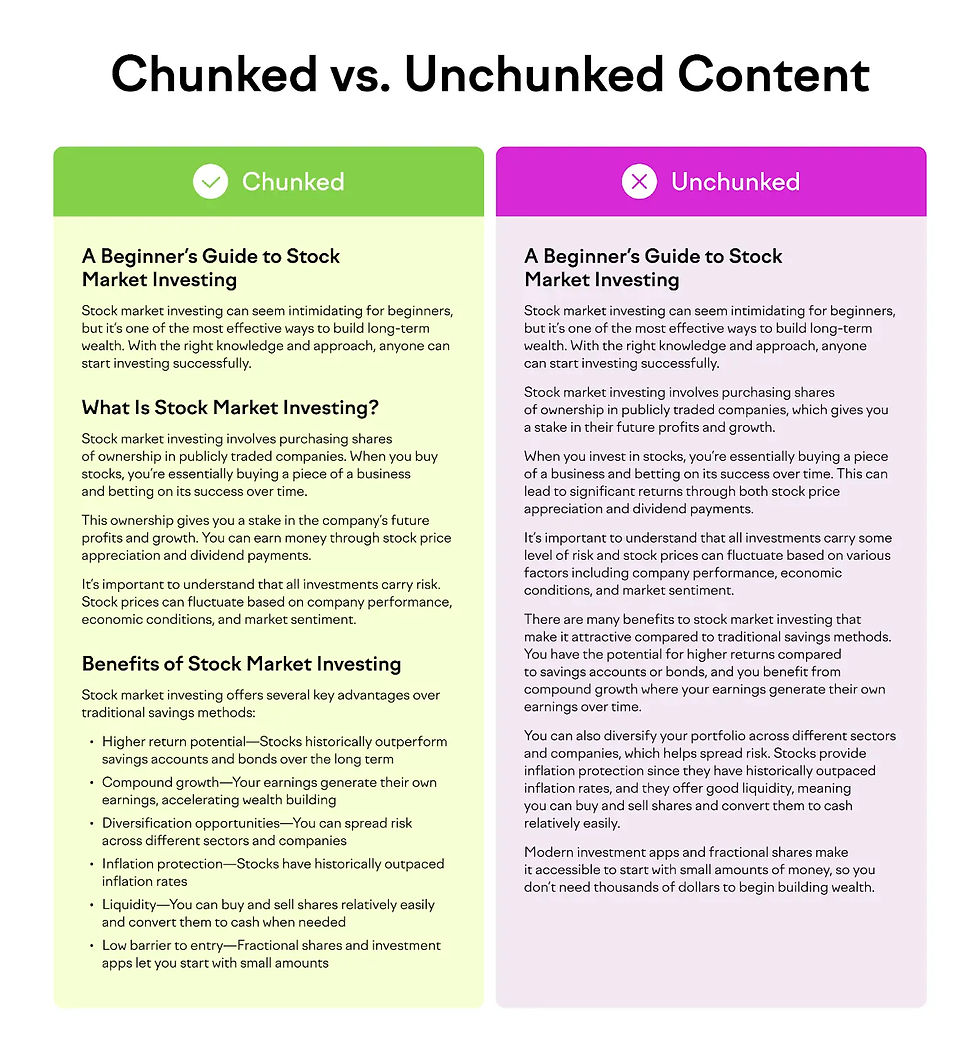
Content chunking is the practice of breaking long-form content into smaller, clearly defined sections. Each section focuses on a specific idea and is presented using headings, short paragraphs, lists, or tables where appropriate.
Instead of presenting information as one continuous block of text, chunking separates it into logical parts. These parts allow readers to quickly locate relevant information without feeling overwhelmed.
Content chunking does not reduce depth. It improves structure. The goal is to present the same information in a more accessible format.
Why Content Chunking Matters for Online Readers
Online reading behavior differs significantly from print reading. Users often arrive on a page with a specific intent and limited time.
Improves Readability
Large blocks of text can be difficult to process, especially on mobile devices. Chunked content reduces visual fatigue and makes pages easier to read across screen sizes.
Supports Scanning Behavior
Most users scan headings before committing to reading a section. Clear chunks with descriptive subheadings help readers decide where to focus their attention.
Enhances Information Retention
Smaller sections allow readers to process information step by step. This structure improves understanding and makes key points easier to remember.
Does Content Chunking Affect SEO?
Content chunking does not directly change rankings on its own, but it strongly supports several SEO-related factors.
Better User Engagement Signals
Well-structured content often leads to longer time on page and lower bounce rates. These engagement signals indicate that users find the content useful and accessible.
Improved Crawlability and Context
Search engines use headings to understand page structure. Clear H1, H2, and H3 tags help define topical relevance and content hierarchy.
Featured Snippet and AI Search Readiness
Chunked content increases the likelihood of appearing in featured snippets, People Also Ask sections, and AI-generated summaries. Search systems prefer content that answers questions clearly and concisely within defined sections.
Content Chunking vs Short Content
Content chunking is often misunderstood as reducing word count. In reality, long-form content benefits the most from chunking.
A detailed article can still be comprehensive while being easy to navigate. Chunking allows long content to remain useful without feeling dense or difficult to read.
The focus should be on clarity, not brevity.
How to Apply Content Chunking Correctly
Effective chunking requires planning, not just formatting changes.
Use Clear and Descriptive Headings
Each heading should reflect the exact topic of the section. Avoid vague titles and ensure that headings align with user search intent.
Limit Paragraph Length
Shorter paragraphs improve flow and readability. Each paragraph should focus on one idea and transition naturally to the next.

Group Related Ideas Together
Do not split closely related points across multiple sections. Logical grouping helps readers understand context without confusion.
Use Lists and Tables Where Appropriate
Lists are useful for steps, comparisons, or summaries. Tables help present structured data clearly. These formats should support understanding, not replace explanations.
Common Mistakes to Avoid in Content Chunking
While chunking is effective, improper use can reduce content quality.
One common mistake is over-segmentation, where content is broken into too many small sections without depth. Another is using headings that do not match the content beneath them, which confuses both users and search engines.
Chunking should improve flow, not interrupt it.
Should You Care About Content Chunking?
For websites focused on organic traffic, content chunking is not optional. It directly supports how users read, how search engines interpret pages, and how content performs across devices.
If your content aims to educate, inform, or guide users, chunking improves accessibility without sacrificing detail. It is especially valuable for blogs, guides, product pages, and knowledge-based content.
Understanding Content Chunking: What Is It & Should You Care? is essential for creating content that aligns with modern search behavior and reader expectations.
Conclusion
Content chunking is a structural approach that improves how information is presented and consumed. It supports readability, engagement, and search visibility without changing the substance of the content.
Rather than focusing on writing less, content creators should focus on organizing better. When applied correctly, content chunking helps users find answers faster and encourages deeper interaction with the page.
Comments